Keep Your Edge: 3 Strength Exercises for the Midseason Grind
by Norman Eng, DC
By the middle of soccer season, your calendar probably looks like a transportation schedule. Practice after school. A match on Saturday. Homework squeezed somewhere in between. Asking your child to do another workout might earn you a look that says, “Haven’t I done enough?”
I get it. But strength work still deserves a place in the week.
Soccer puts the body to work. Every sprint, sudden stop, and change of direction asks the muscles to produce force and control it. A short strength routine gives players time to practice that control without chasing a ball or reacting to an opponent.
For our Inter Atlanta families, let’s keep it manageable: walking lunges, bodyweight squats, and planks with shoulder taps. Three sets of each, twice a week. No heavy lifting or special equipment needed.
What we are working toward
During the season, strength work should leave players ready for practice and competition. These exercises target lower-body strength, muscular endurance, and trunk control. They give us a starting point we can build on.
Slow down and make the repetitions count. If your child is wobbling through lunges or rushing through squats just to finish, reset. Bodyweight exercises still require effort, and higher repetitions can create fatigue. The goal is to support their soccer, not leave them struggling to get through the next practice.
Walking lunges
Soccer often asks players to support themselves on one leg while the other moves. Walking lunges challenge the thighs and glutes while practicing balance and control.
Begin standing tall with your feet about hip-width apart. Take a comfortable step forward and bend both knees, lowering your back knee toward the ground. Keep your front foot planted and your torso controlled. Push through your front foot and bring the back leg forward into the next step.
Think about moving along two parallel tracks instead of a tightrope. A little space between your feet makes balance easier. Let the front knee follow the direction of your toes, and avoid allowing it to collapse inward. Choose a depth you can control comfortably.
If walking lunges are too difficult, practice stationary split squats with light support before progressing.
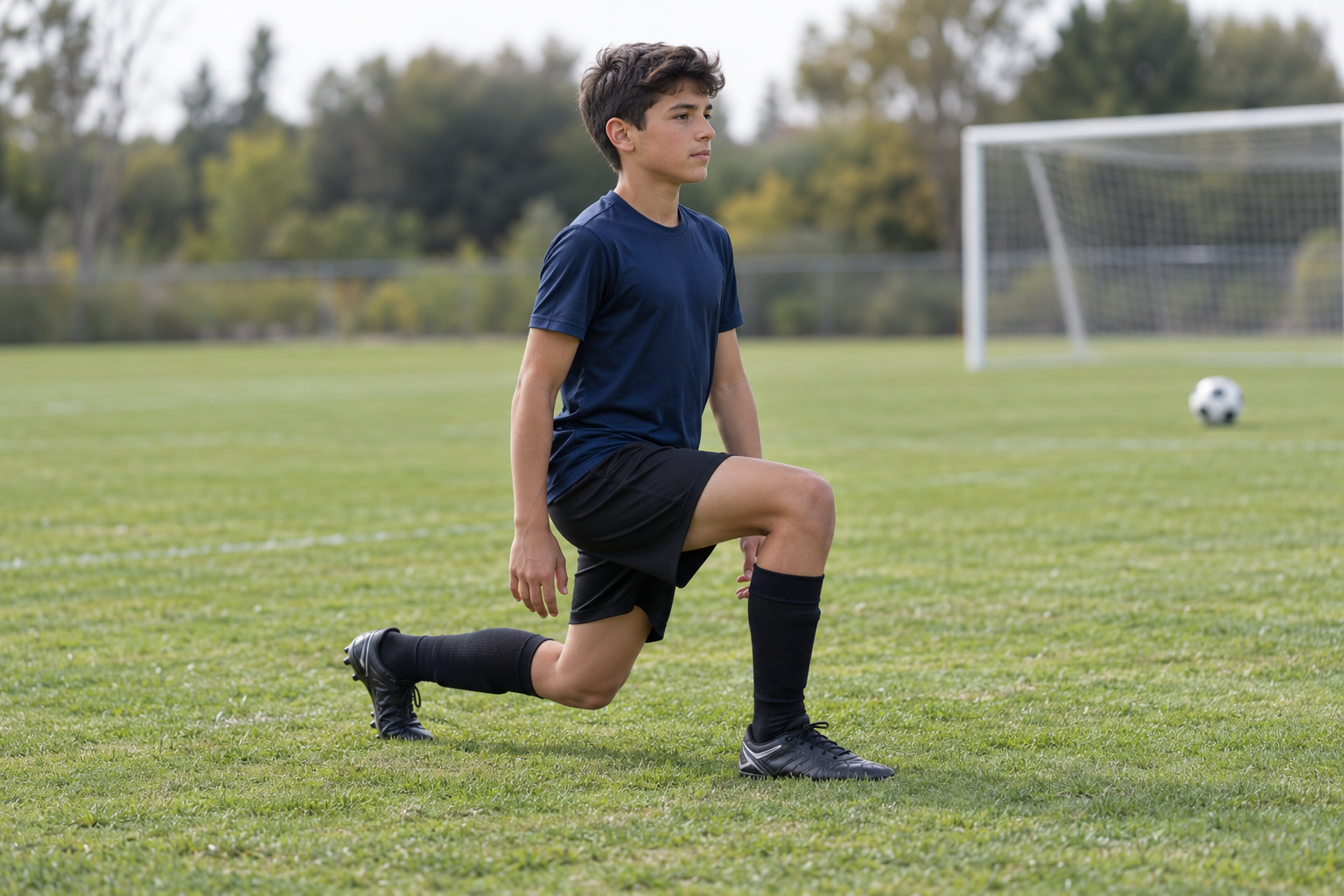
Walking lunges: 3 sets of 15 repetitions per leg (30 total steps per set), twice a week.
Bodyweight squats
Squats work the thighs and glutes while teaching players to bend through their hips and knees together. Focus on balanced foot pressure and controlled lowering.
Stand with your feet roughly shoulder-width apart, allowing a slight outward turn if that feels natural. Reach your arms forward for balance. Bend your hips and knees as though sitting down onto a chair, keeping your feet firmly on the ground. Stand back up smoothly.
Lower only as far as you can maintain control without pain. Your torso may lean forward naturally; the goal is a stable position rather than a perfectly upright chest. Keep your knees moving in the same direction as your toes and avoid bouncing at the bottom.
Make the lowering phase deliberate, then stand without rushing. If needed, lightly touch a chair as a depth guide before standing. Watch for heels lifting or knees drifting inward.
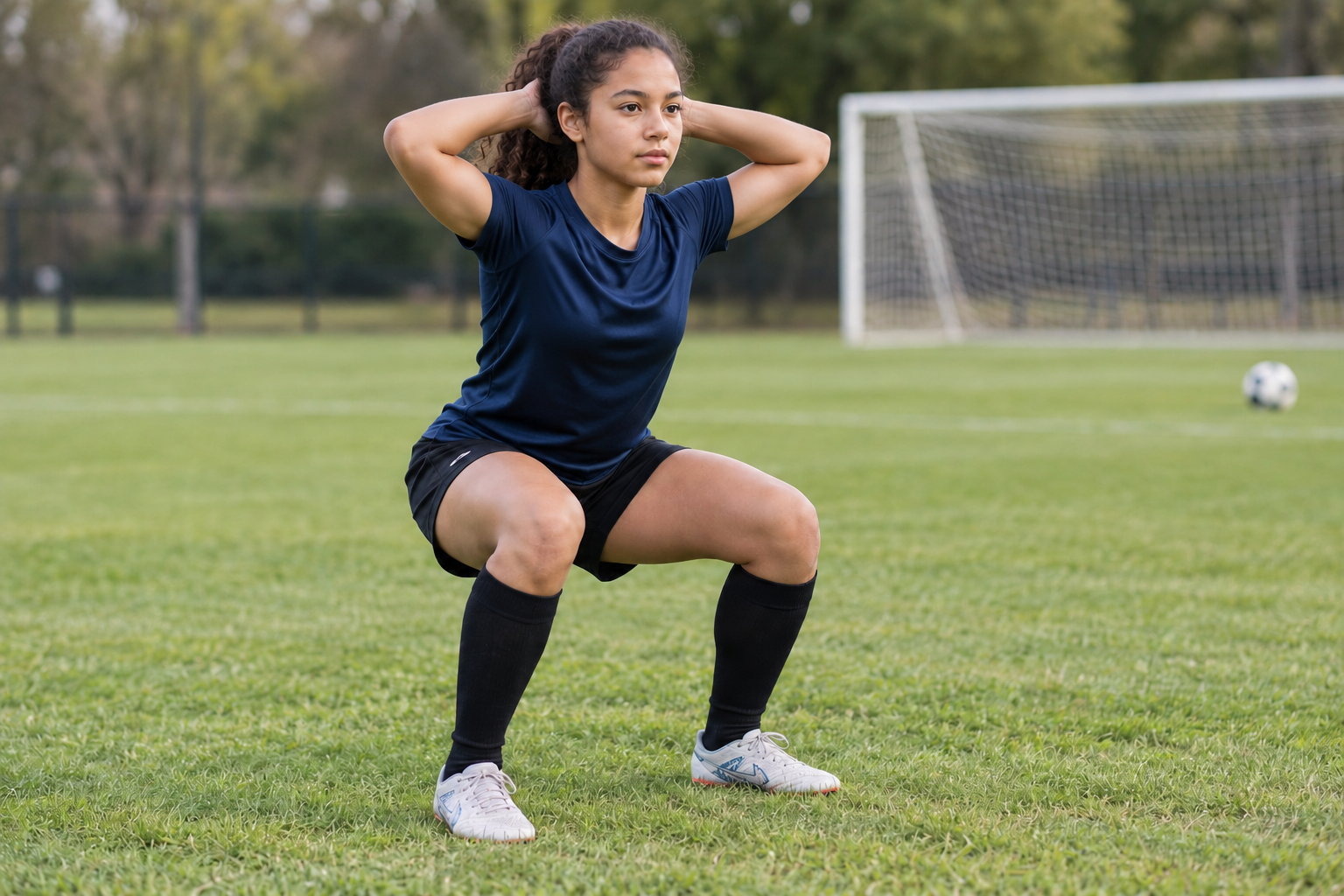
Bodyweight squats: 3 sets of 15 repetitions, twice a week.
Planks with shoulder taps
I have written about core strength before, and it deserves a place in this routine. Think of the core as a steady base for moving arms and legs. It helps control the trunk and pelvis as the limbs move. Soccer players need that control during changing directions, reaching for the ball, and managing contact.
Shoulder taps add movement to a high plank. When one hand leaves the ground, the remaining points of support must help keep the body steady. The challenge is to resist twisting while maintaining support through the shoulders and arms.
Start in a push-up position with your hands beneath your shoulders. Place your feet slightly wider than hip-width for balance. Gently brace your abdomen, keep your hips in line with your body, and continue breathing.
Lift one hand to touch the opposite shoulder, return it to the floor, and alternate sides. Move slowly enough that your hips stay reasonably level. Avoid sagging through your lower back or turning the exercise into a fast, rocking motion.
Count each shoulder touch as one repetition and alternate the starting hand between sets. If control is difficult, practice with your hands on a sturdy, secured bench.
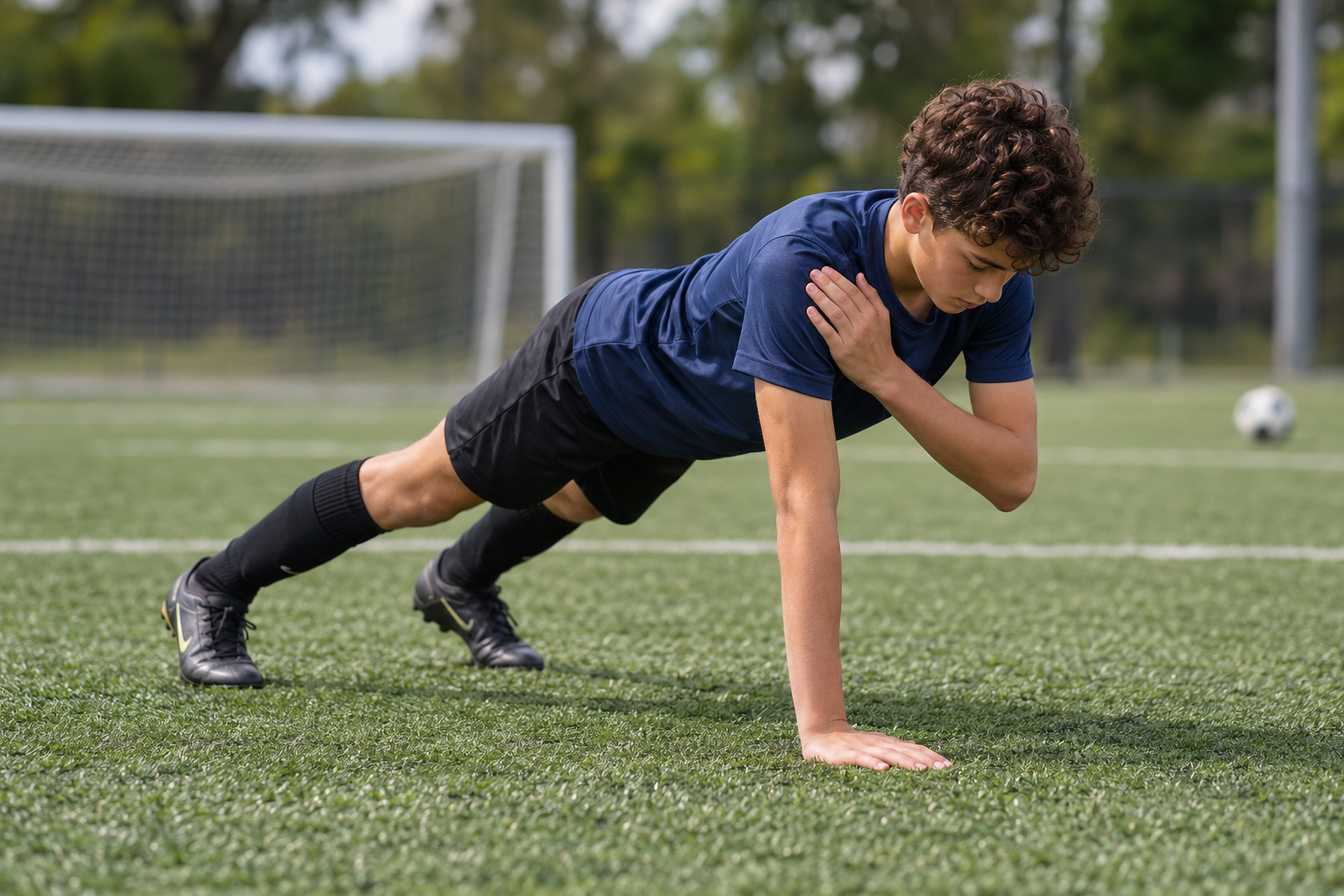
Planks with shoulder taps: 3 sets of 15 total taps, twice a week.
Making the routine work during the season
Choose two nonconsecutive days that fit the team schedule. Coordinate with your coach if strength work is already part of practice. Avoid introducing the full routine immediately before an important match or adding it when a player is already unusually fatigued.
Warm up first with easy movement, then rehearse a few controlled repetitions. Complete the exercises with roughly 45 to 60 seconds of rest between sets, taking longer when needed. This is strength practice, so there is no prize for finishing fastest.
Three sets at the listed repetitions is the target, not an entry requirement. Beginners can start with fewer repetitions or one to two sets and build up. Stop for pain, and seek guidance for persistent symptoms or an existing injury. A coach or qualified professional can help check technique.
Parents, pick the days together and focus on effort and technique. You do not need to turn the living room into a training facility.
For our Inter Atlanta players, the first goal is simple: make strength work a regular part of the week. Keep the movements controlled, keep the core involved, and leave room for recovery. These small habits can stay with your player long after this season ends.