The "Growth Spurt" Strain: Sever’s, Osgood-Schlatter, and What’s Really Happening to Your Growing Athlete
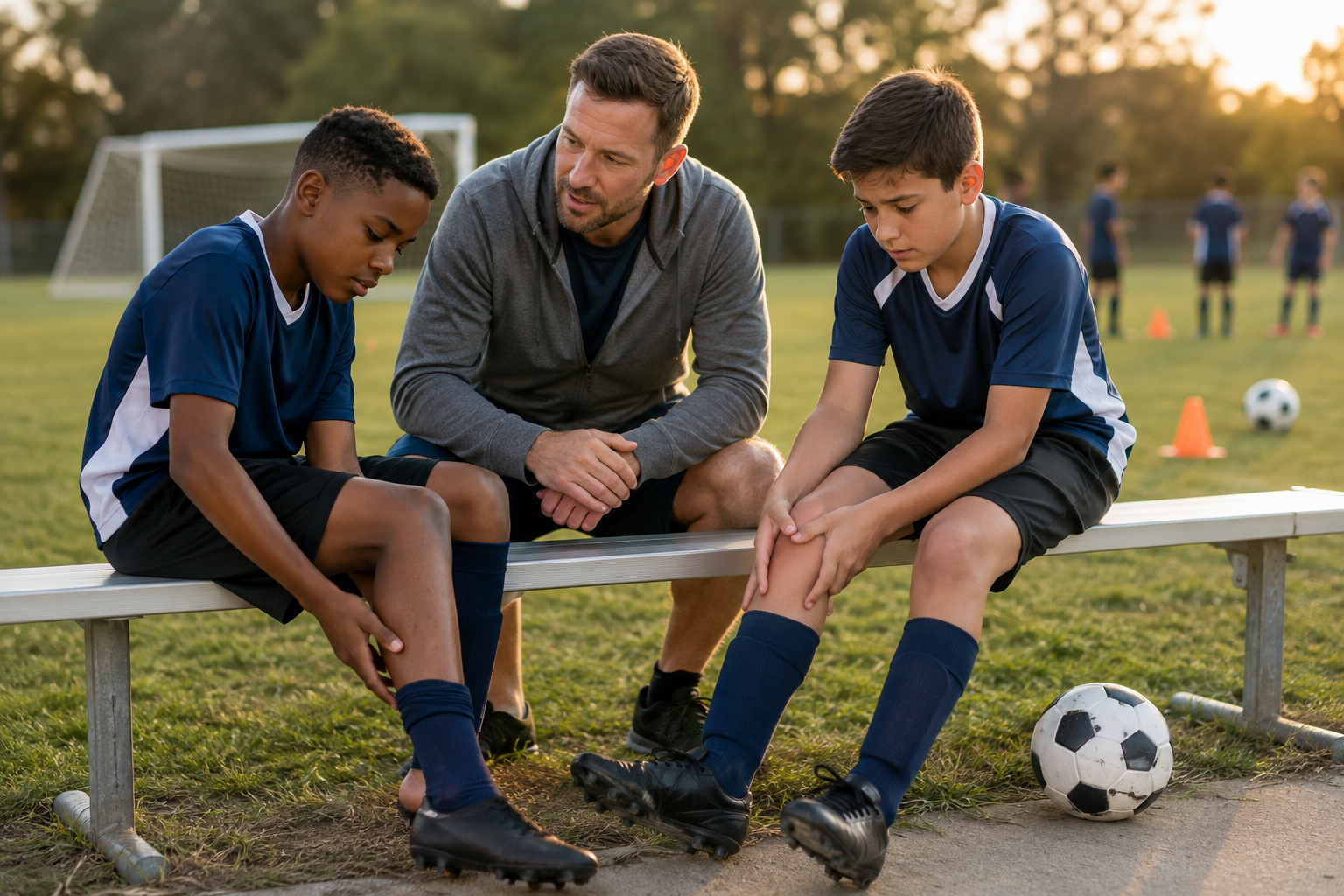
If you have a young athlete between the ages of 8 and 15, you may have noticed a predictable, almost mechanical chain reaction: practically overnight, their pants are suddenly two inches too short, they can sleep until noon on weekends, raid the fridge like a hungry bear, and complain of persistent, deep heel or knee pain after practice.
When young players start limping off the field or wincing as they unlace their cleats, parents often assume the pain stems from a routine muscle strain, an ankle sprain, or a bad bruise from turf impact. In reality, these recurring aches are rarely isolated soft-tissue injuries. Instead, they are classic signs of a growth-related condition known as traction apophysitis.
During high-growth phases, an athlete's body goes through massive physical transformations that place temporary yet intense stress on developing joints. To help you navigate this phase without subjecting your child to unnecessary bench time or lingering frustration, this guide breaks down the underlying conditions, why your athlete's body is reacting this way, and practical strategies to keep them moving safely.
Understanding the Injury: Sever’s and Osgood-Schlatter
To understand why growing athletes experience localized joint pain during a growth spurt, you first have to look at how a young athlete's skeleton develops compared to an adult's fully formed frame.
Before a child's bones are completely mature, they contain active areas of developing cartilage near the ends of the long bones called growth plates. An apophysis is a specialized type of growth plate that acts as an anchor point where a major tendon attaches strong muscle directly to bone. Because these structural anchor points consist of soft, developing cartilage rather than solid, fully fused bone, they are naturally far more vulnerable to repetitive pulling and stress.
When high-volume sports like soccer, basketball, track, or gymnastics overlap with an active growth spurt, two specific traction injuries frequently show up:
Sever’s Disease (Calcaneal Apophysitis)
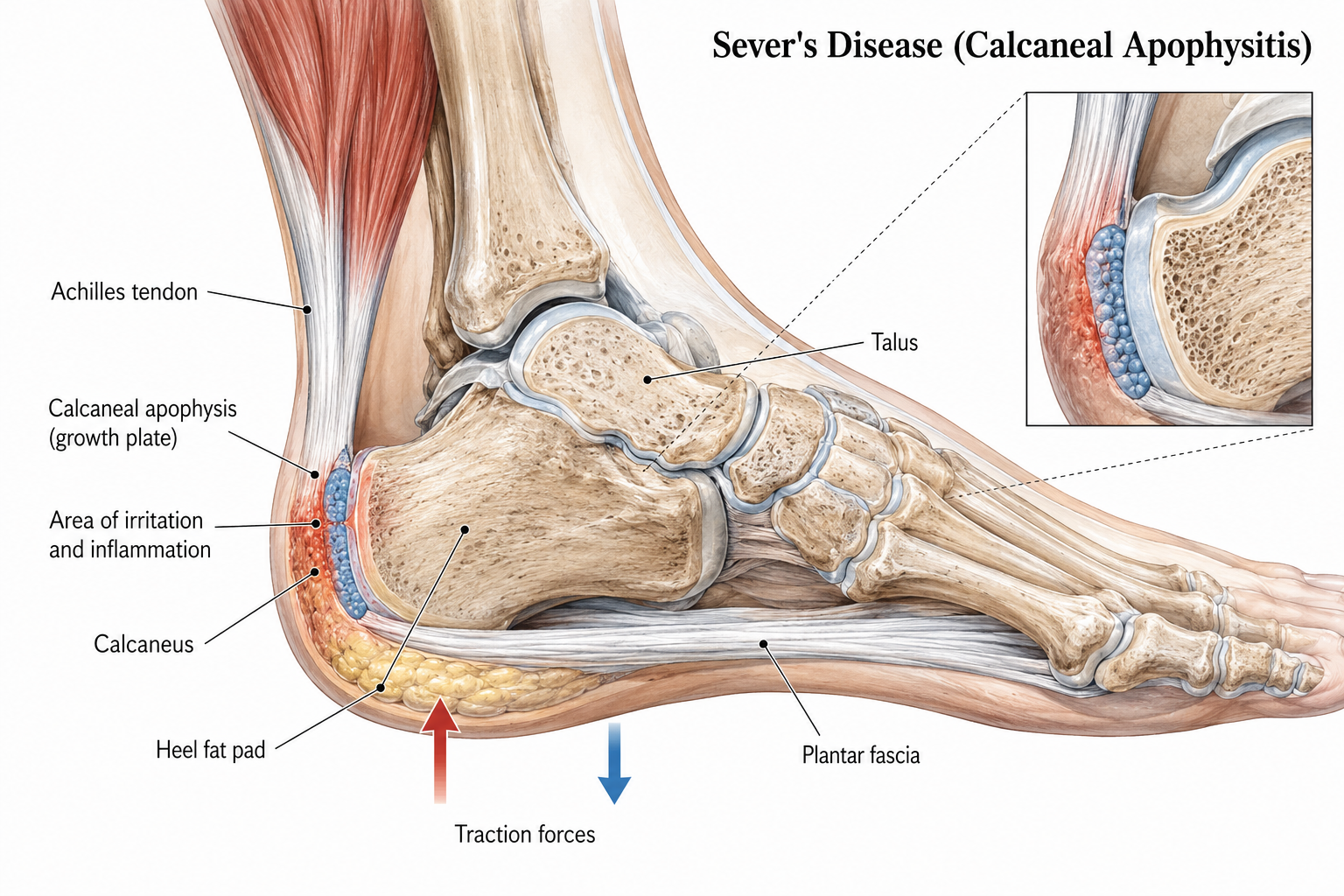
Sever’s Disease
The Location: The active growth plate located at the back of the heel bone (calcaneus).
Peak Age Window:Ages 8 to 14. While most common between ages 8 and 12, it frequently extends into ages 13 and 14 for boys or late bloomers undergoing delayed growth spurts.
Primary Symptom & Presentation: Sharp, localized heel pain during or after running, jumping, or cutting. It is particularly aggravated by wearing flat athletic cleats on hard ground or synthetic turf, often causing the athlete to run on their tiptoes to avoid putting weight on their heels.
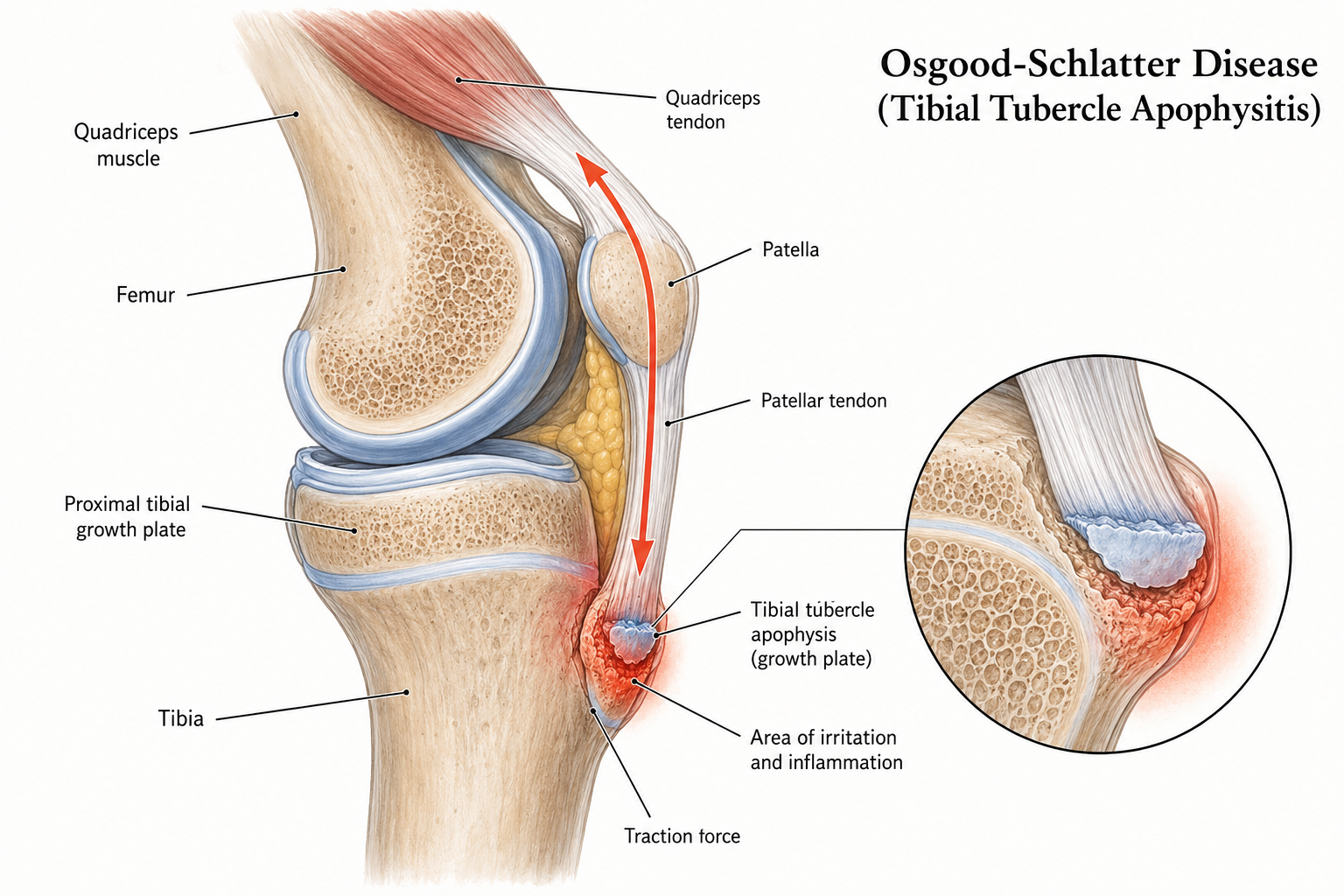
Osgood-Schlatter Disease
Osgood-Schlatter Disease (Tibial Tubercle Apophysitis)
The Location: The growth plate at the bony bump located directly below the kneecap (tibial tuberosity).
Peak Age Window:Ages 10 to 15, coinciding directly with mid-to-late adolescent growth spurts.
Primary Symptom & Presentation: Point tenderness, visible swelling, and an increasingly pronounced bony bump just below the knee. Pain is acutely triggered by activities requiring forceful quadriceps contraction, such as kicking a soccer ball, sprinting, jumping, squatting, or taking impact on the knees.
Comparison Breakdown: Sever’s vs. Osgood-Schlatter
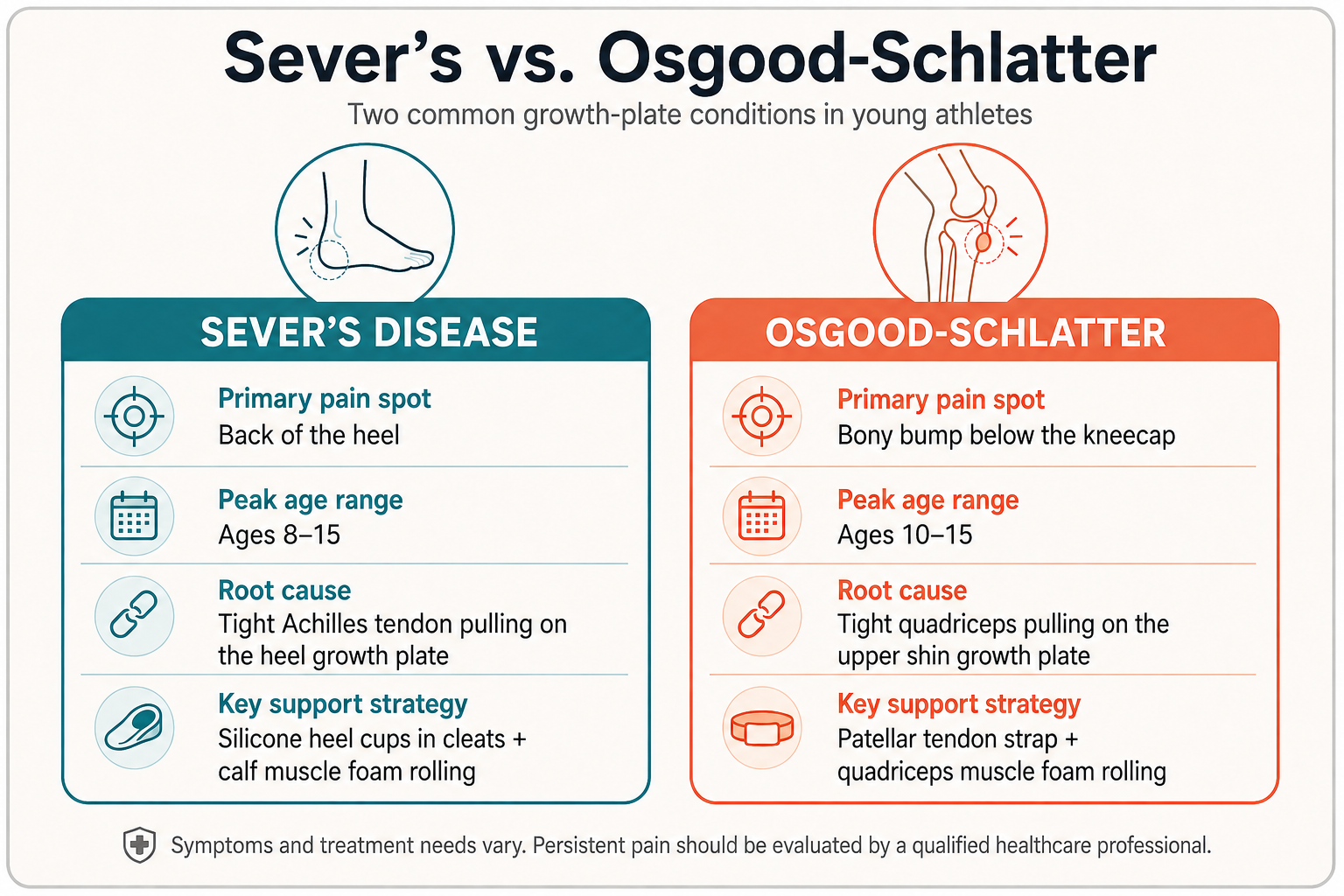
Sever’s Disease and Osgood -Schlatter
The Growth Spurt Connection: Why Pain, Deep Sleep, and Huge Appetites Hit at Once
It is rarely a coincidence when joint pain, extreme tiredness, and a bottomless pit of an appetite hit your household all in the same month. During Peak Height Velocity (PHV), which is the window where adolescents can shoot up 3 to 4 inches in a single year, three major things happen at the same time:
1. Tight Muscles vs. Fast-Growing Bones
In human development, bones lengthen from the outside in. The feet and lower legs elongate first, followed by the thigh bones. Crucially, bones grow much faster than muscles and tendons can stretch. As long leg bones shoot up rapidly, major muscle groups like the calves and quads get stretched taut over longer lever arms like tight rubber bands.
Because the muscles are unusually tight, every sprint, jump, or sudden stop exerts heavy, continuous pulling on the softer, un-fused growth plates. This constant pulling creates localized irritation, micro-tears, and the characteristic pain of apophysitis.
2. High Recovery Demands & Deep Sleep (Sleeping Until Noon!)
If your young athlete is suddenly dragging during the day, impossible to wake up for school, or capable of sleeping until noon on Saturdays, their body isn't being lazy. It is working overtime behind the scenes. Human Growth Hormone (HGH) is primarily released while kids are in deep, slow-wave sleep. Building dense new bone, expanding joint cartilage, and repairing micro-tears from daily practice takes an enormous amount of biological energy. That massive energy drain forces their central nervous system to demand long, deep recovery sleep.
3. Elevated Appetite & Caloric Demand (The "Bottomless Pit")
Rapid bone growth mixed with heavy sports practice creates a massive fuel deficit. Your athlete is constantly raiding the pantry, eating double portions at dinner, and asking for snacks every two hours because their engine is burning fuel at record speed. To build new bone and rebuild tired muscles, their body demands a steady influx of real fuel, especially high-quality protein, healthy fats, and crucial bone-building minerals like calcium, magnesium, and vitamin D.
Actionable Management: Protecting Your Athlete’s Joints and Performance
When an athlete develops Sever's or Osgood-Schlatter, complete bed rest or sitting out an entire season is rarely necessary and often counterproductive. The primary goal is managing physical strain and reducing constant pulling on the growth plate while supporting healthy growth.
1. Smart Load Adjustments (Modify, Don't Stop)
If acute heel or knee pain causes an athlete to limp or run with an awkward stride, pushing through the pain can cause secondary compensation injuries in the hips or back. Temporarily back off high-impact field work. Swap 1 or 2 high-impact practices a week for low-impact conditioning, such as swimming, stationary cycling, or pool running, for 7 to 14 days. This reduces ground-impact forces and lets growth plate inflammation cool down without losing cardio fitness.
2. Foam Rolling Over Static Stretching
When a growth plate attachment point is actively inflamed, pulling hard on the attached tendon through deep static stretching can actually yank harder on the growth plate and make the pain worse. Instead of stretching the tendon, focus on soft-tissue massage using a foam roller on the thick muscle belly of the quads or calves. Relaxing the middle of the muscle safely takes tension off the rubber band without stressing the tender bone attachment.
3. Quick Gear Modifications
Simple, temporary structural tweaks can take immediate mechanical strain off the vulnerable growth plate during training:
For Sever’s Disease: Place soft silicone heel cups inside athletic cleats or sneakers. Raising the heel slightly shortens the calf muscle's pulling distance, reducing tension on the heel bone during running and jumping.
For Osgood-Schlatter: Apply a patellar tendon strap just below the kneecap. The pressure helps spread out pulling forces across the strap rather than focusing all that force directly onto the tender shin bump.
4. Sleep and Nutrition Foundations
Treat your child's recovery environment with the same importance as their training schedule. Protect a consistent 9 to 10-hour sleep window so natural growth hormone can do its work. Keep the kitchen stocked with whole proteins, complex carbohydrates, and solid hydration to supply the raw building blocks their body needs to adapt and build stronger connections.
The Big Picture for Parents
Growing up fast is tough on a young athlete’s body, but growth spurt injuries do not have to put your child’s sports season on hold. Sever’s disease and Osgood-Schlatter are temporary structural challenges, not permanent joint damage.
By recognizing the signs early, swapping aggressive tendon stretching for muscle belly foam rolling, using simple support gear, and respecting their massive sleep and nutrition needs, you can help your athlete navigate Peak Height Velocity safely. Protect their recovery window today so they can stay active, perform at their best, and build a strong foundation for long-term athletic health.